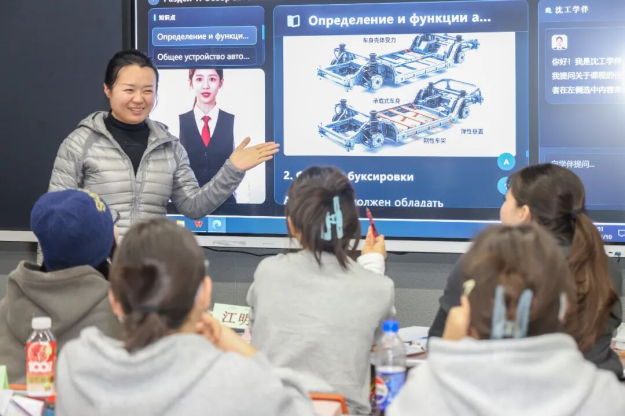
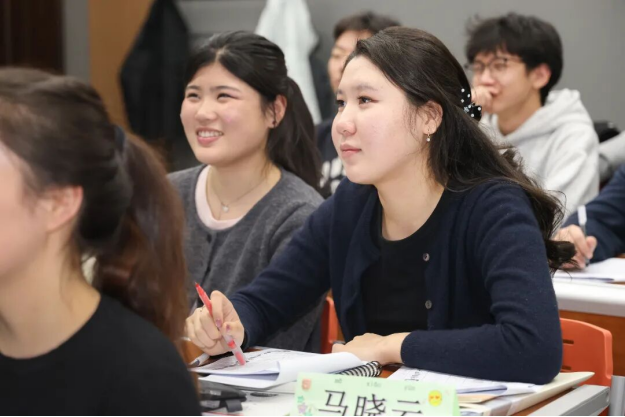
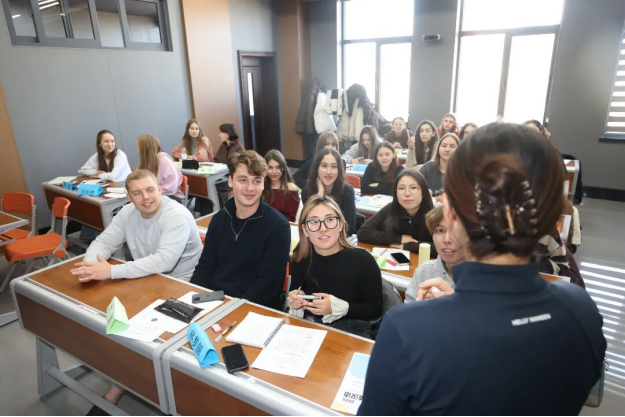
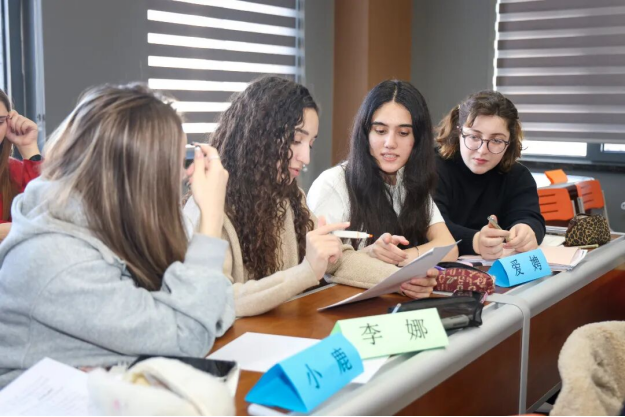
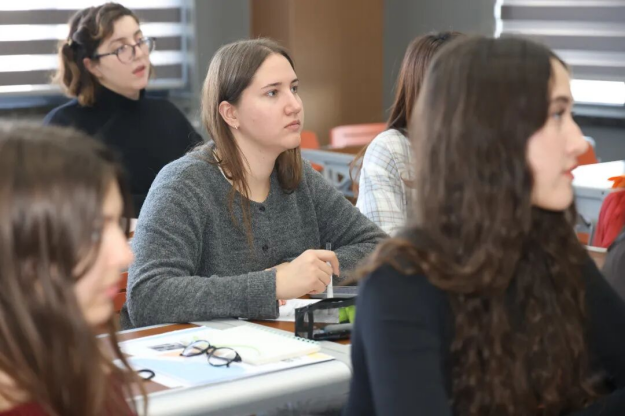
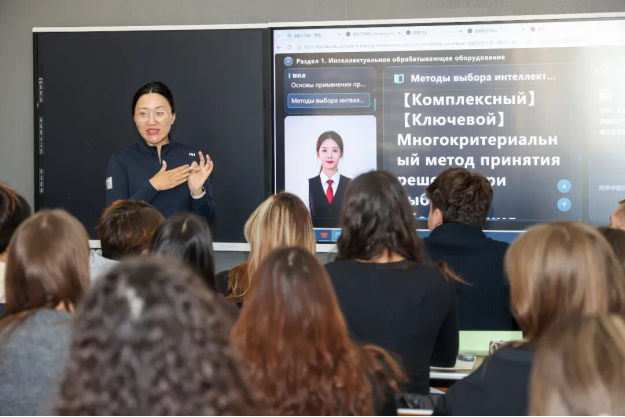
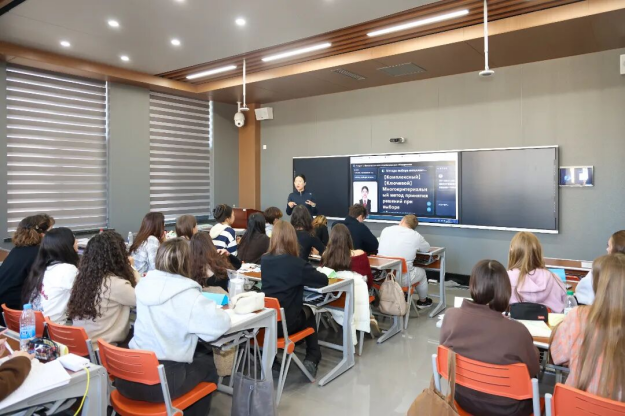
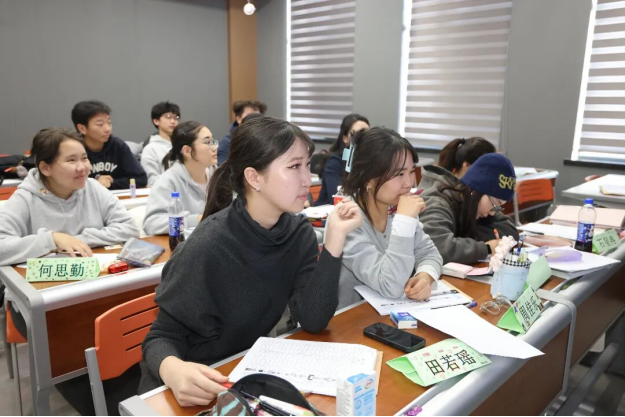
Recently, our university completed the development of 43 discipline-specific AI agent courses. The courses cover directions such as Mechanical Design, Manufacturing and Automation, New Energy Vehicle Engineering, Computer Science and Technology, and Artificial Intelligence, and support teaching, Q&A, and assessment in both English and Russian. They mainly serve students of the university–enterprise joint training program from Mongolia, students of the “2+2” programs with Russia and Malaysia, trainees of the AI workshop from South Korea, and students in short-term study tours.
AI Agent Courses Cover Multiple Major Directions
The 43 AI agent courses developed this time address the university’s needs for international talent cultivation. Focusing on the key points, difficulties, and common problems in discipline course learning, they build conversational teaching resources that support follow-up questions. Students can ask the agent questions in English or Russian according to their learning progress, receiving support such as explanations of course concepts, instruction on knowledge points, exercise practice, and feedback on the causes of errors.
AI agent courses are not simply “Q&A tools”; they are teaching support systems built on professional knowledge bases for each course. They serve classroom teaching and extend to pre-class preview and after-class review, providing international students with more flexible and personalized learning support.
“Three-in-One” Knowledge Base: Ask About Professional Learning Anytime
The AI agent courses are built on a “three-in-one” professional knowledge base: course syllabi and core knowledge points as the foundation, typical engineering cases and practice scenarios as support, and exercise banks with error-cause analysis forming a closed loop. Together, the three constitute a conversational teaching resource base that enables the agent to explain course content, handle follow-up questions, and provide exercise feedback.
In the teaching process, the AI agent courses run through the whole process of pre-class, in-class, and after-class learning. Before class, they can push preview tasks to help students sort out new terms and basic concepts in advance; in class, they act as in-class professional teaching assistants — a knowledge point can be asked about repeatedly, or explained again in another language; after class, they generate targeted exercises and give feedback on the causes of errors, helping students make up for what they did not understand in class.
Language + Specialty: Solving Difficulties and Improving Learning Effectiveness
For international students, the difficulties in professional course learning often lie not only in the specialty itself but also in language comprehension. Engineering courses are dense with terminology and abstract concepts, and it is difficult to review a lesson repeatedly after it is taught only once in class, which easily affects learning outcomes.
AI agent courses, “patient and available day and night,” provide international students with reusable learning support. Students can ask questions about the same knowledge point multiple times and switch expressions according to their language habits, obtaining more personalized and diversified learning help. This approach effectively alleviates the common problems international students face in professional learning — “too many terms, difficult concepts, hard to review” — and improves the quality and efficiency of classroom teaching.
Industry Resources Integrated into Classrooms, Serving Students in Programs of Different Durations
The knowledge bases of the 43 AI agent courses were transformed from the teaching resources of the Modern Industry Academy. By bringing engineering cases in actual use in industry, practical training scenarios, and real project content into the course agents, international students learn not only abstract concepts from textbooks but also real engineering content that is used in industry and recognized by enterprises.
For short-term visiting students, the AI agent courses support “specialty + language” featured courses and industry–education integration practice, helping students understand an intelligent manufacturing production line within about ten days of study; for students in long-term programs such as the “reverse 2+2” program, the courses provide systematic bilingual support for professional courses, helping them complete their professional learning more smoothly.
Next, the university will gradually expand course coverage, continuously optimize the standardized English–Russian bilingual terminology, and, relying on the Modern Industry Academy platform, bring in enterprise mentors and foreign teachers for joint proofreading, with localized adjustments based on the language habits of students from different countries, gradually transforming “specialty + language” from a requirement for teachers into a teaching capability that can be supplied on a regular basis. Meanwhile, the university will continue to take AI agent course development as a starting point to further promote the digital and international development of courses, improve the quality of international student cultivation, and provide better, more convenient, and more precise learning support for international students from multiple countries studying in China.
Translated by Basic Courses Department