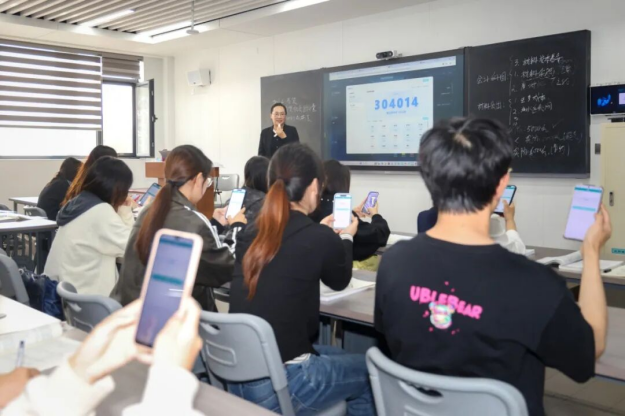
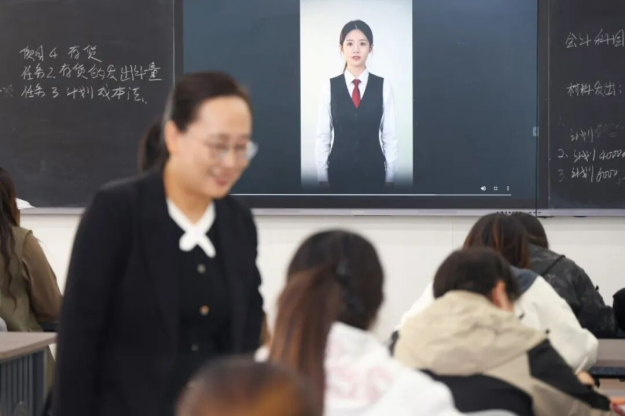
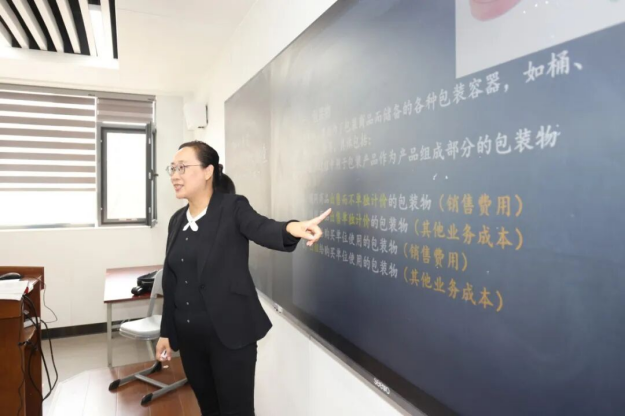
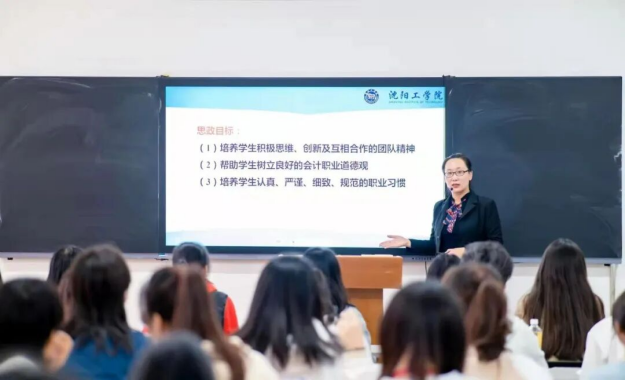
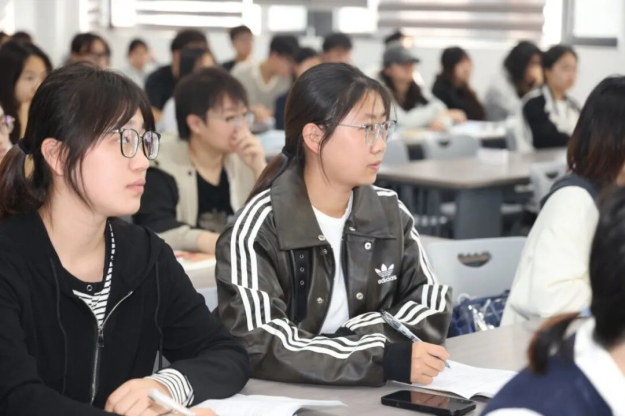
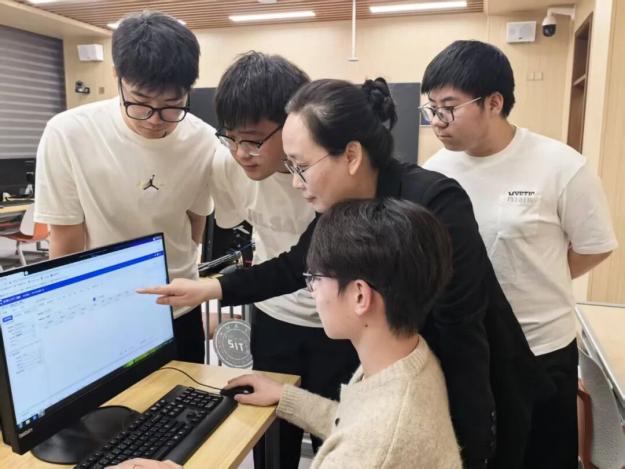
Still worried about making mistakes in accounting entries, not understanding accounting standards, or not getting timely answers to after-class questions? To address the pain points of traditional accounting course teaching, the course team of the Higher Vocational and Technical College, based on digital and intelligent teaching reform, developed the AI agent course for Enterprise Financial Accounting. At present, the course has been put into regular teaching use in multiple classes of the Big Data and Accounting program (Grade 2024). It has responded to more than a hundred student questions in total, enables all-day accompanying learning, and has become the students’ in-class professional teaching assistant.
As a core course of the accounting major, Enterprise Financial Accounting covers the six major accounting elements — assets, liabilities, owners’ equity, revenue, expenses, and profit — with many knowledge points and strong practicality. Limited by class hours, the traditional classroom can hardly respond immediately to every student’s questions, and problems such as errors in preparing entries and confusion about accounting processes often trouble students. To address this teaching bottleneck, teacher Kou Xiaohong took the lead and, together with teachers Wang Xia, Liu Xinyu, Zhang Yinghui, and Lü Wei, formed a course team to develop and build a dedicated course agent.
A high-quality knowledge base is the core foundation for the professional and reliable operation of the agent. Abandoning the drawbacks of generalized output from general-purpose large models, the course team built a three-in-one knowledge base, focusing on practical cases of real enterprise accounting and financial statement preparation, while also meeting the needs of consolidating basic knowledge points and of higher-ability students’ position-expansion learning. The team polished the content repeatedly and carried out multiple rounds of proofreading to ensure that the answers meet the requirements of higher vocational teaching, avoid knowledge-point deviations, and suit the learning needs of students at different levels.
The AI agent course connects course standards with real enterprise position practices, accompanying students through the whole learning process before, during, and after class. Before class, students use the agent to sort out key and difficult points and build their own knowledge frameworks. In class, basic questions such as entry writing and accounting processes are handed to the agent, so that teachers can focus on giving guidance on problem-solving approaches. After class, with multiple rounds of Q&A and extended exercises, students control their own learning pace. The agent also provides around-the-clock Q&A, breaking the limits of time and space. Whether students get stuck in classroom exercises or encounter difficult problems in after-class review, they can ask questions at any time, and the agent immediately outputs well-organized answers, extends related knowledge points, and helps sort out the knowledge framework. These Q&A materials are all carefully crafted by the course teachers, aligned with the goals of higher vocational accounting talent cultivation and course teaching requirements, and suited to the learning needs of students with different foundations.
The development of the AI agent course not only serves student growth but also feeds back into the improvement of teachers’ teaching capabilities. In the process of organizing the knowledge base and debugging and proofreading the model, teachers re-deconstruct the course knowledge system and examine learning difficulties from the students’ perspective. With AI taking over basic Q&A, teachers’ energy is freed, so that teacher–student interaction focuses more on higher-order teaching and personalized communication. This also accumulates replicable and promotable practical experience for developing intelligent teaching assistants for other courses at the university.
Translated by Basic Courses Department