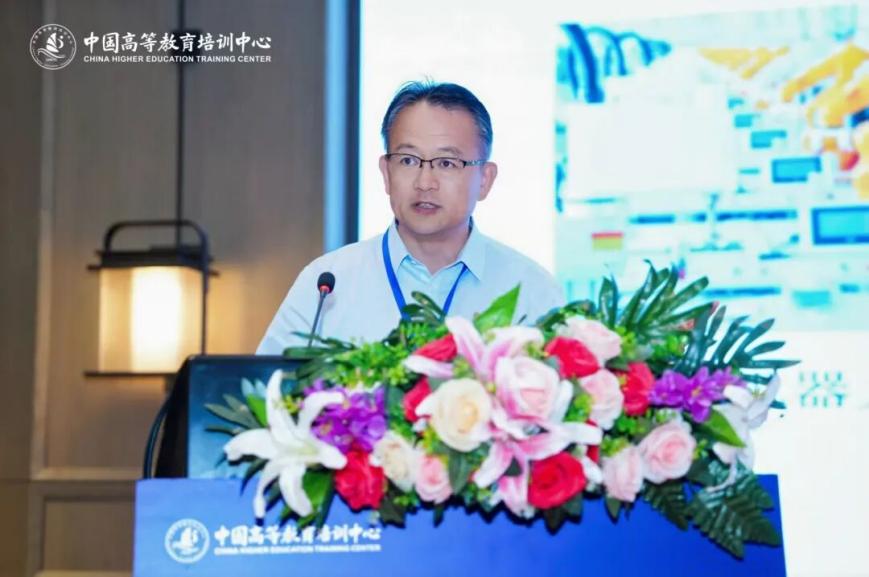
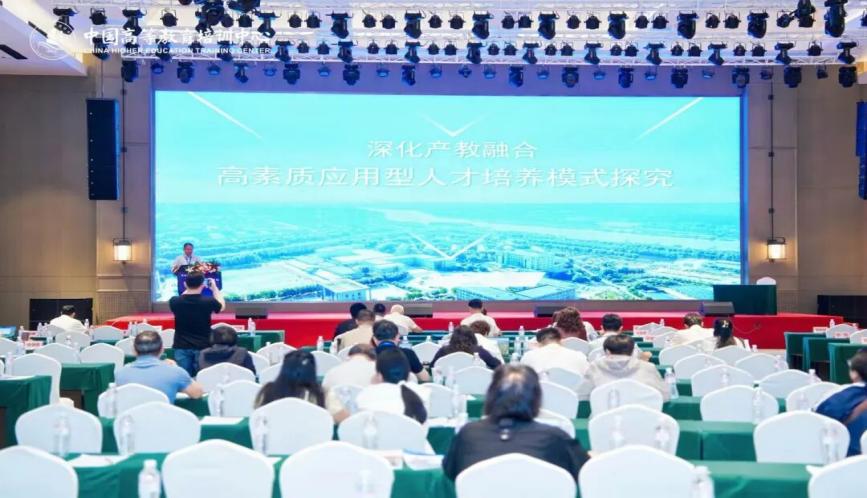
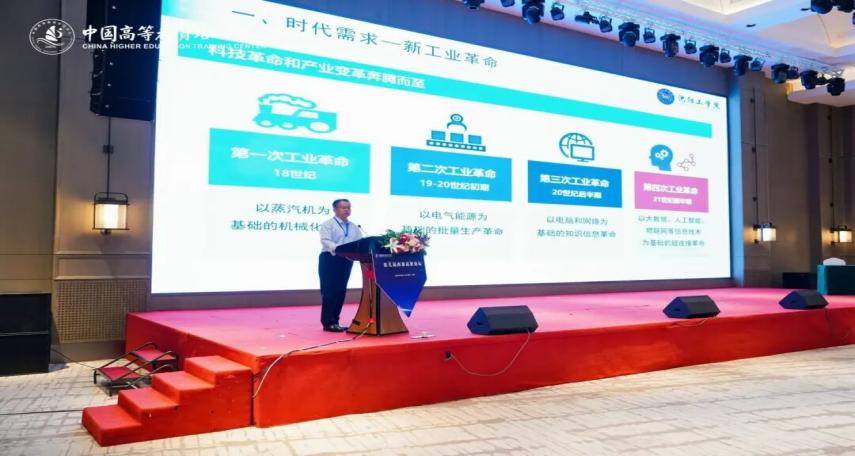
The 9th Western Higher Education Forum was held in Hangzhou, Zhejiang Province from May 28 to 31. Guided by the Chinese Society of Higher Education, the forum was co-hosted by the China Higher Education Training Center, the Editorial Department of Chongqing Higher Education Research, and the Western Higher Education Research Center. Centered on the theme “Artificial Intelligence and the Building of a Powerful Country in Higher Education”, it focused on bottlenecks and reform directions of higher education in the new era. Experts, scholars, education administrators and industry representatives nationwide gathered to explore new paths for high-quality development of higher education in the AI era. Li Kangju, President of our university, was invited to attend the forum and deliver a keynote speech titled Deepening Industry-Education Integration and Exploring Training Modes for High-Quality Application-Oriented Talents, which drew widespread attention and high recognition from all participants.
In his speech, based on the core orientation of application-oriented universities and against the backdrop of new-era development and the growth of the artificial intelligence industry, President Li systematically elaborated on the university’s innovative concepts and practical measures for integrated education through industry-university collaboration. His sharing covered four dimensions:
First, deepen two-way school-enterprise linkage and strive to build modern industrial colleges to implement the collaborative talent training mechanism of “Six Joint Efforts and Five Integrations”. Relying on regular teaching mechanisms of industrial colleges, the university deeply integrates job requirements with practical training programs to cultivate students’ professional competence and comprehensive literacy simultaneously.
Second, strengthen the construction of dual-qualified teaching staff. Teachers are organized to take special industrial training and professional qualification assessments, fostering a high-caliber interdisciplinary teaching team with solid theoretical teaching capabilities and frontline practical experience.
Third, jointly develop distinctive curriculum systems with enterprises. Drawing on high-quality school and enterprise resources, curricula are dynamically updated in line with the latest industrial standards to break down barriers between classroom teaching and industrial practice.
Fourth, adopt project-based teaching. This model balances talent training objectives and corporate development demands, delivering win-win outcomes for three parties: advancing the university’s quality improvement, supplying talented workforce to enterprises, and supporting students’ all-round growth.
Packed with solid data, vivid cases and pragmatic viewpoints, the speech closely matched the transformation and development needs of application-oriented universities. It provided replicable and referable practical experience for participating institutions to advance industry-education integration reform and optimize application-oriented talent training models, winning high praise and warm responses from experts and scholars on site. Participants held in-depth exchanges with President Li concerning talent cultivation and the construction of industry-education integration platforms.
This forum served as a high-quality platform for external exchange and learning, broadening our university’s vision for school-running and further boosting its influence in domestic application-oriented higher education. Moving forward, taking this forum as an opportunity, our university will actively learn advanced school-running experience from peer institutions, further advance industry-education integration reform and optimize the talent training system. Aligning with higher education trends in the AI age and regional economic and social development demands, we will continuously improve school-running quality and education capacity, cultivate more high-quality, interdisciplinary and innovative application-oriented talents, and contribute institutional strength to building a powerful country in higher education and advancing high-quality development of regional industries.
Translated by Basic Courses Department