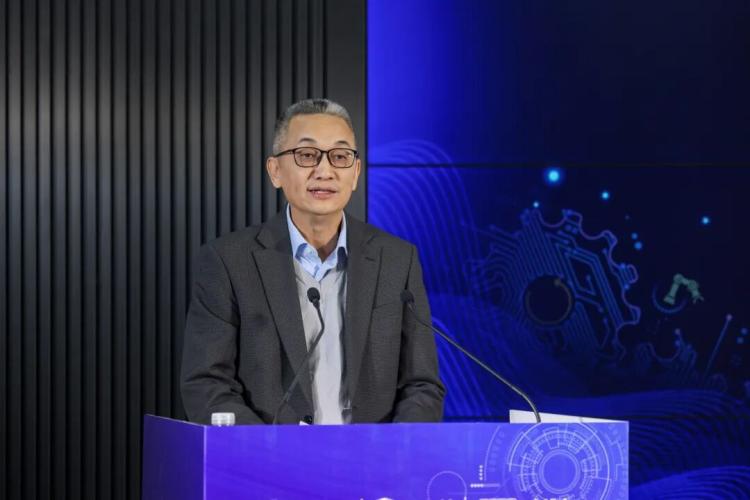
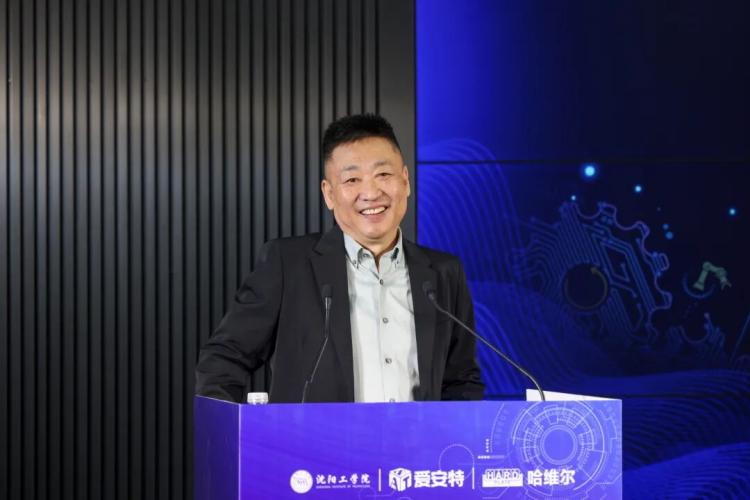
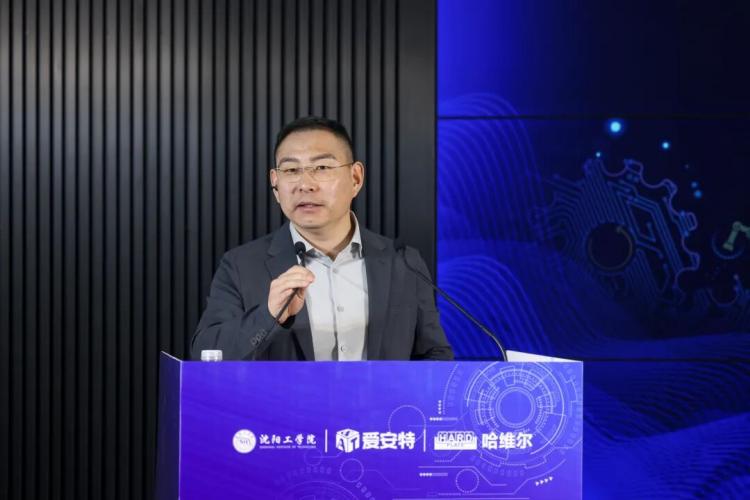
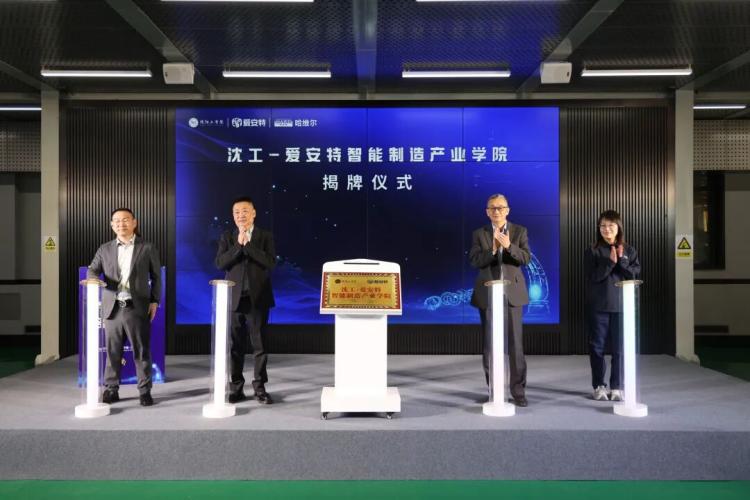
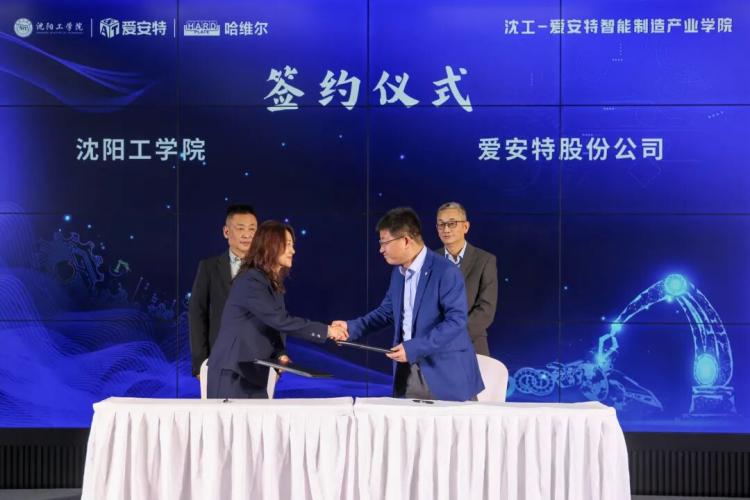
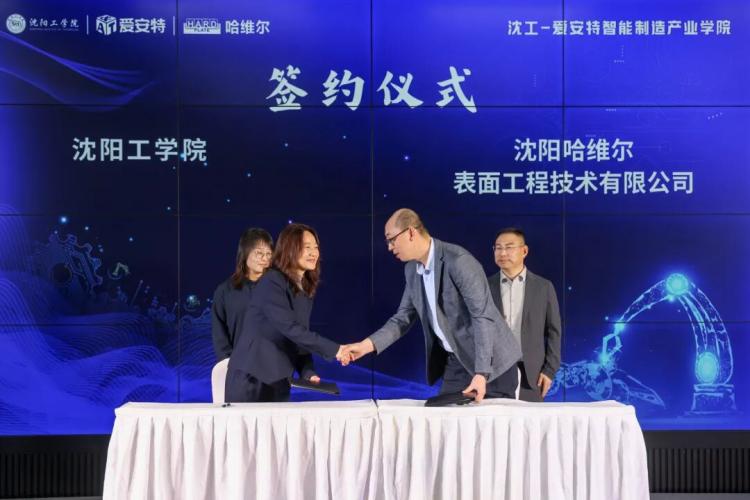
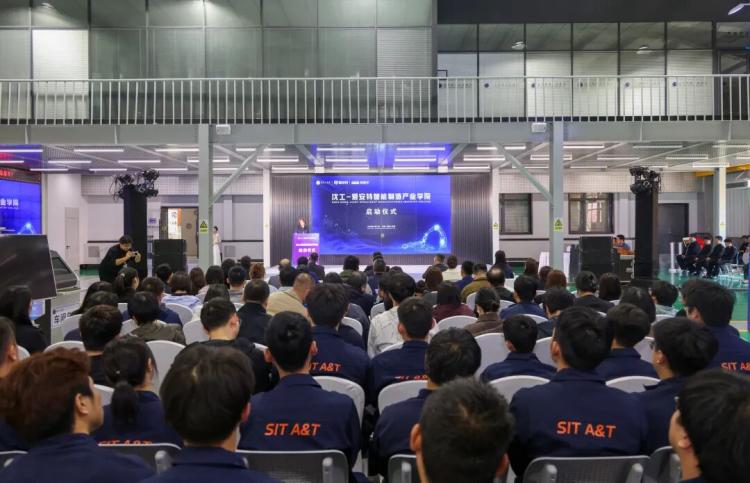
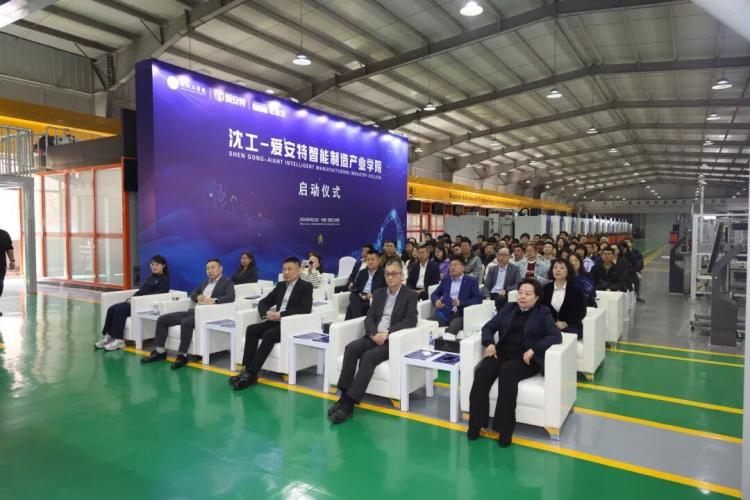
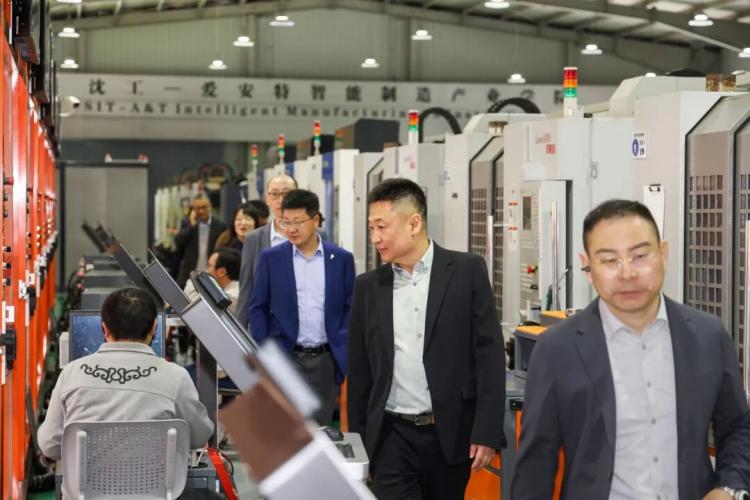
On April 23, the launch ceremony for the SIT–Aiante Intelligent Manufacturing Industry College was held at our university. Dai Yuanmin, Chairman of Aiante Co., Ltd., Li Weiming, Vice General Manager of Aiante Co., Ltd. and Chairman of Shenyang Havier Surface Engineering Technology Co., Ltd., Wang Zhaobao, Chairman of our University Board, and Hu Xiaomei, Party Committee Secretary of the university, attended and addressed the event. All university leaders were present, and the meeting was chaired by Vice President Xu Ying.
Dai Yuanmin noted that Aiante, which originated on a campus and has deep roots in industry, has always remained committed to its educational mission and social responsibility. The establishment of the SIT–Aiante Intelligent Manufacturing Industry College is a major step in deepening industry–education integration and collaborative talent cultivation. The university offers a sound teaching system and educational advantages, while the enterprise brings real industrial scenarios, supply chain resources, and hands‑on engineering experience. The two sides will integrate frontline cases and practical training projects into teaching, open up full‑process industrial resources, and create a pathway where students “enter as freshmen and are ready to graduate as employable professionals.” This will build a talent pool for the company, cultivate applied technical talent for society, and create a win‑win ecosystem for the university, the enterprise, and the students.
Wang Zhaobao stated that the SIT–Aiante Intelligent Manufacturing Industry College represents an “upgraded version” of the university’s industry‑education integration—a true‑to‑life combat platform and practice factory that fully realizes a whole‑value‑chain talent development model. The college will deeply integrate corporate culture, real‑world scenarios, job‑based compensation, and professional skills, enabling students to learn real technology, practice real skills, and secure high‑paying jobs. The university encourages faculty to work on the industry front lines to enhance their practical teaching abilities, and it prioritizes hands‑on skills and project outcomes as key ways to cultivate students. At the same time, the university is accelerating the development of AI agents, continuously improving its practice‑teaching platforms, addressing weaknesses in areas such as intelligent agents, and expanding the depth and breadth of university‑industry collaboration—all to cultivate highly competent applied talent and provide strong support for regional industrial development and the university’s high‑quality growth.
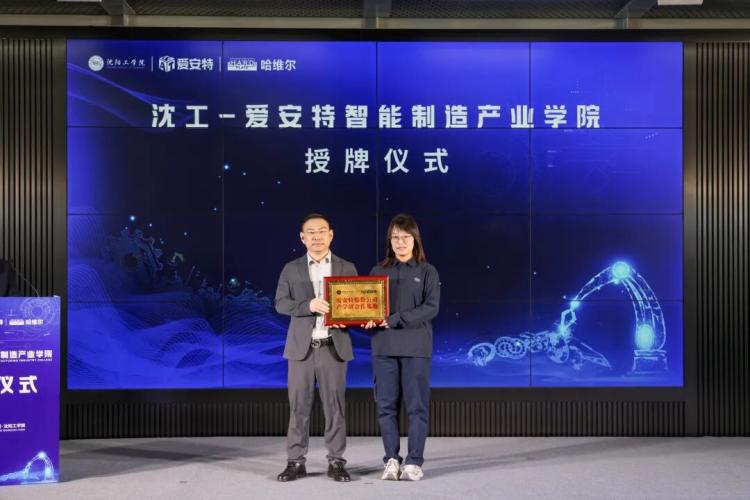
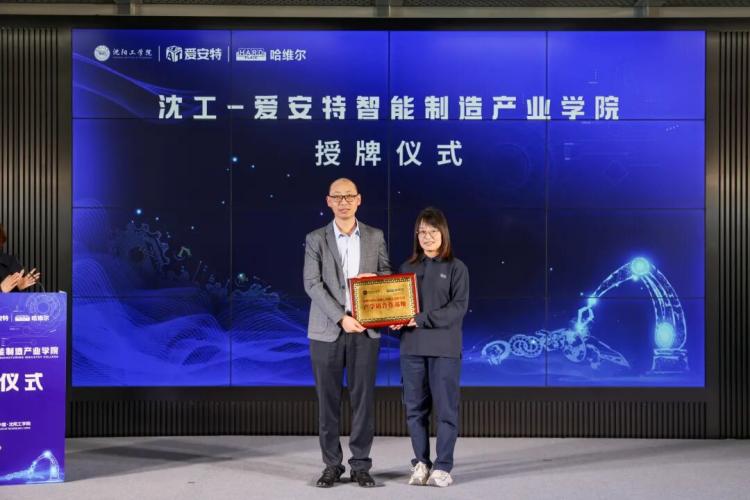
Li Weiming gave a detailed introduction to the collaborative project. The industry college aims to deepen industry‑education integration by embedding real corporate projects throughout the teaching process, achieving “learning by doing, creating by learning.” The college innovatively adopts a dual‑driven teaching model of “real projects + IPD process,” transforming Aiante’s actual models and corporate projects into modular courses and new‑style loose‑leaf textbooks. Students can participate in the entire process—from process planning and CNC programming to part machining and precision inspection—immersively experiencing the rhythm of industrial production. Relying on the “factory‑on‑campus” production platform, the college introduces real production lines and implements a dual‑mentor system of “on‑campus instructor + enterprise mentor,” dedicated to cultivating high‑caliber applied talent. At the ceremony, leaders from the university and enterprise jointly unveiled the SIT–Aiante Intelligent Manufacturing Industry College and signed an in‑depth cooperation agreement. The enterprise presented plaques to the university designating it as the “Aiante Co., Ltd. Industry‑Academia‑Research Cooperation Base” and the “Shenyang Havier Surface Engineering Technology Co., Ltd. Industry‑Academia‑Research Cooperation Base,” marking a new stage where university‑industry collaboration has moved from strategic alignment to substantive, deep, normalized operation.
The establishment of the SIT–Aiante Intelligent Manufacturing Industry College is a practical move by the university to meet the demands of new productive forces and deepen industry‑education collaborative education. It is also a vivid example of an enterprise deeply participating in talent cultivation and fulfilling its social responsibilities. The college creates a project‑based, practical training model that uses real production lines as classrooms and real corporate orders as teaching content. It builds a teaching system that integrates “jobs, courses, competitions, and certifications,” fostering deep integration between talent cultivation and industry, and precise alignment between teaching content and job requirements. The university and enterprise are working together to seamlessly connect the education chain, talent chain, industry chain, and innovation chain—empowering industry with talent and driving development with practical action—setting a new benchmark for high‑quality development through university‑local collaboration and industry‑education symbiosis in the new era.
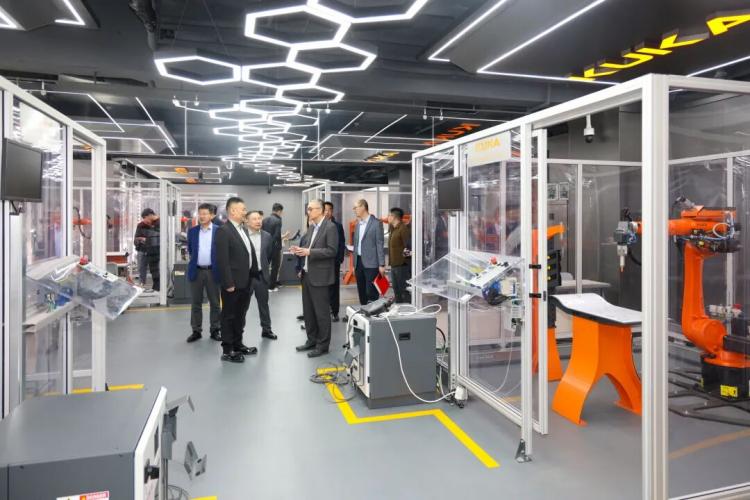
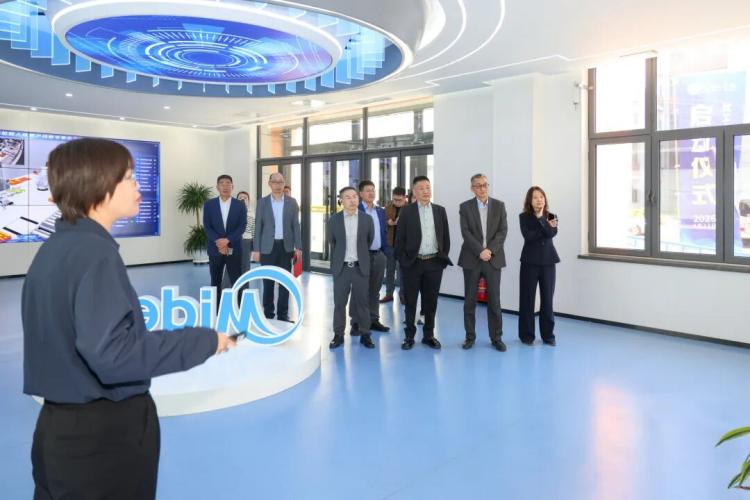
Before the ceremony, attendees visited several facilities on campus, including the KUKA Authorized Industrial Robotics College, SIT–Siemens College, SIT–Midea Digital Lighthouse College, Rockwell Automation College, Inspur Industrial Internet Joint Innovation Center, and Huawei‑SIT Modern Industry College.
Also present at the event were Zheng Shupeng, IT Director of Aiante Co., Ltd.; Wang Xiao, Marketing Manager; Liu Shuang, Chief Engineer of Shenyang Havier Surface Engineering Technology Co., Ltd.; Dong Yanming, Marketing Director; representatives from relevant university administrative departments; deans of various schools; and some faculty and student representatives from the School of Mechanical Engineering and the School of Higher Vocational Education.
Translated by Basic Course Department