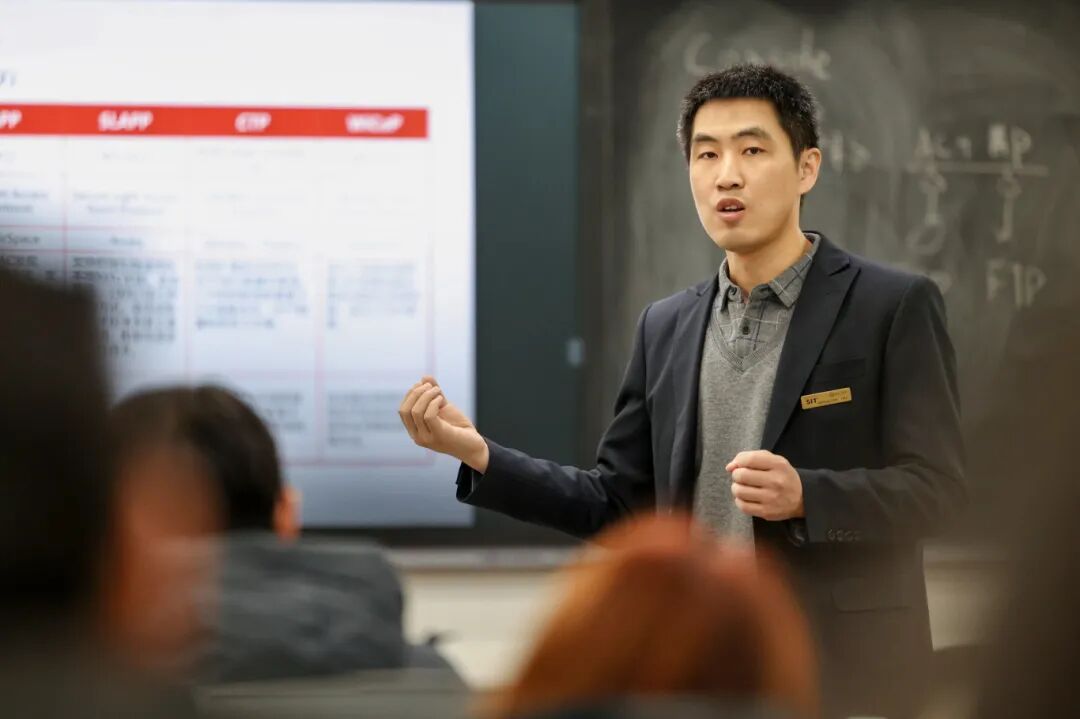
Amidst the wave of integraeen industry and education, it is inevitable that higher education institutions anchor talent cultivation to industrial demands! Our school is acting in accordance with this trend. By theend of 2024, we have fully launched curriculum transformation work, making full use of resources from industry colleges. Relying on high-quality faculty trained in enterprise digital intelligence capabilities, we hadly reformed existing course teaching to align with enterprise standards and job requirements. This thoroughly solves the problem of traditional course learning failing to support the achievement of students' professional abilities and breaks down traditioing barriers. This teaching innovation not only gives teachers a clearer direction but also further enhances students' learning experience and sense of gain. Mr. Ding Xiaojiang, the leader of uter Network Technology major at the Higher Vocational Technical College, is a vivid practitioner of frontline teaching in this reform. Follow his perspective to unlock the code of Shengong's curriculu!
Following the requirements of industry-education integration, this curriculum transformation closely aligns with mainstream industry technologies. Relying on high-quality resources from modern industry colleges, the school rs each major to benchmark against industry job demands. It conducts curriculum system restructuring, course content transformation, and classroom teaching reform centered on improving students' practical skills and future sustainable development. This aurse content to connect with advanced enterprise technologies, classroom teaching reform to be conducted through real enterprise projects, and classroom assessment to be guided by industry qualification certification. To ensure the implementf the reform, the school conducts comprehensive digital faculty training, promoting teachers' transition to "dual-qualified" professionals. The Computer Network Technology major at the Higher Vocational College has advanceestructuring with the Huawei certification system as the core. 80% of professional foundation and core courses have been transformed, and all professional courses have integrated the Huawei knowledge system, tial results of the reform becoming evident.
Mr. Ding Xiaojiang is a direct participant and beneficiary of the curriculum transformation. Speaking about the details of the transformation, Mr. g is full of genuine feelings: "This is not a simple adjustment of teaching content, but a comprehensive renewal from concept to model. For teachers, it is a challenge, but even more so an opportunity for growth! After the curriculum transformation, teaching has more concrete tools, and teaching effectiveness is achieved with half the effort."
Teacher Ding Xiaojiang has actively engaged in the school's digital faculty training, delving deeply into cutting-edge techngies such as Data Communication, 5G, and HarmonyOS. He successfully completed training in four primary and two intermediate modules of the Huawei Industry Academy, equipping his "teacing toolkit" with the most advanced enterprise technologies and practical experience. He discarded the original lesson plans, reselected teaching materials, and compiled practical operation manuals tailored for higher vocational students, eliminating content sistent with career directions to make knowledge points more focused and practical tasks clearer.
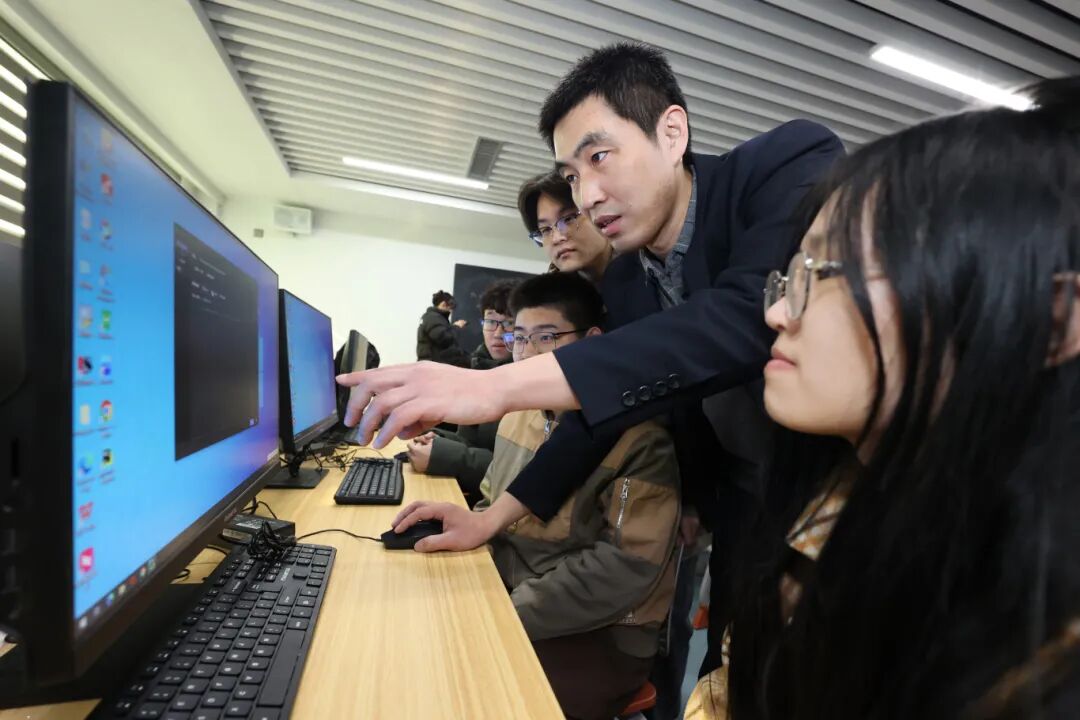
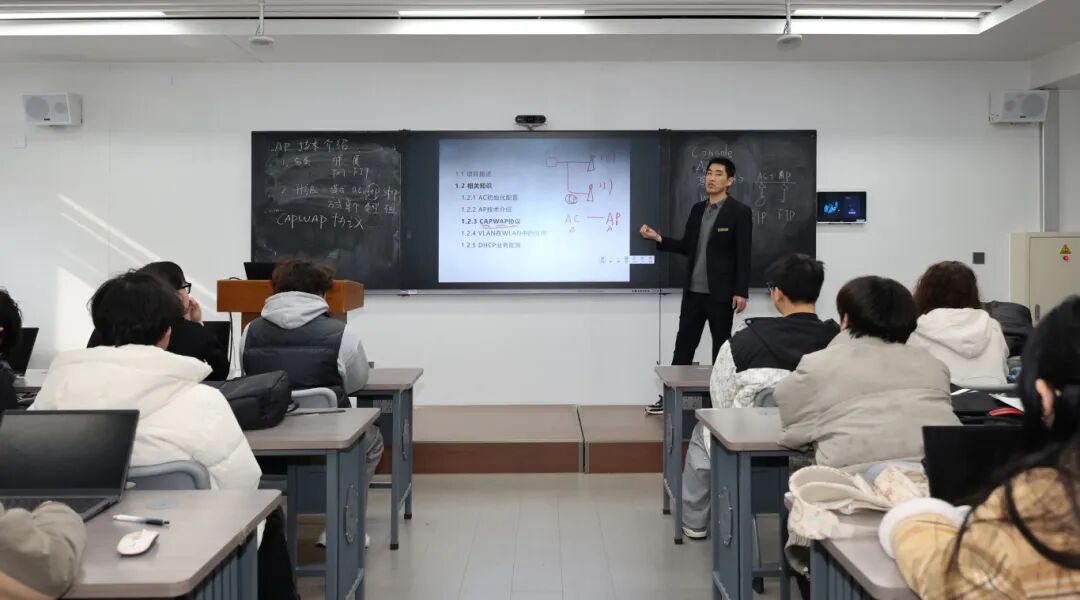
In Teacher Ding Xiaojiang's classes on "Routing and Switching Technology and Application" and "Wireles Application," the changes brought by the curriculum upgrade are tangible! "In the past, teaching mixed various contents, with scattered theory and weak practical training. Now, relying on the Hawei system, the connection between theory and practice is particularly tight. The Huawei simulator allows students to practice both in and out of class, making the teaching highly targeted," said Teacng. He added that after the curriculum transition, his teaching ideas became clearer, and students' learning feedback improved significantly. Students feel this particularly deeply; previously abstract skills like network configuration and sp can now be mastered through repeated practice, significantly improving their hands-on abilities.
"Now we learn practical technologies at the industry forefront that align with Huawei certifications, so we know exactly where what learn can be applied, making our goals very clear." "We can practice both in and out of class; it's no longer just listening to theory—we have too many opportunities to hands-on"... These are the students' genuine evaluations of the curriculum transition. Huawei certification exams allow students' learning outcomes to gain industry recognition, further stimulating their enthusiasm for learning. From classrootmosphere to learning effectiveness, the changes brought by the curriculum transition have given students a tangible sense of achievement.
Currently, the curriculum transition in the Computer Network Technology major at the Higher Vocatillege covers 80% of professional foundation and core courses, with all professional courses integrated into the Huawei knowledge system, serving as an excellent demonstration of the school's curriculum refoowever, this is just a microcosm of our school's curriculum transition and upgrade!
This curriculum transition has made teaching more efficient for teachers and learning more efficient for students. Thise curriculum restructuring is a key measure to deepen the integration of industry and education, ensuring teaching aligns with actual industrial development while allowing both teachers and students to gain from the ren the future, the school will continue to advance this work, deepening and solidifying curriculum reform. With teaching models that better fit industrial needs, the school aims to cultivate more high-qualiechnical and skilled talents, ensuring the fruits of industry-education integration continuously benefit every teacher and student!
Translated by Basic Courses Department