Against the accelerated evolution of a new round of scientific and technological revolution and industrial transformation, our university has been closely aligning with national strategies and industrial development needs, and firmly committed to the cultivation of application-oriented talents. With the core development guideline of “taking industrial colleges as the standard, AI as the tool, and building industrial colleges into entrepreneurship platforms for teachers and students”, the university continues to promote the deep integration of education and teaching with real industrial scenarios, striving to build a new talent cultivation model featuring “classrooms connected with projects, teaching serving industries, and learning integrated into practice”.
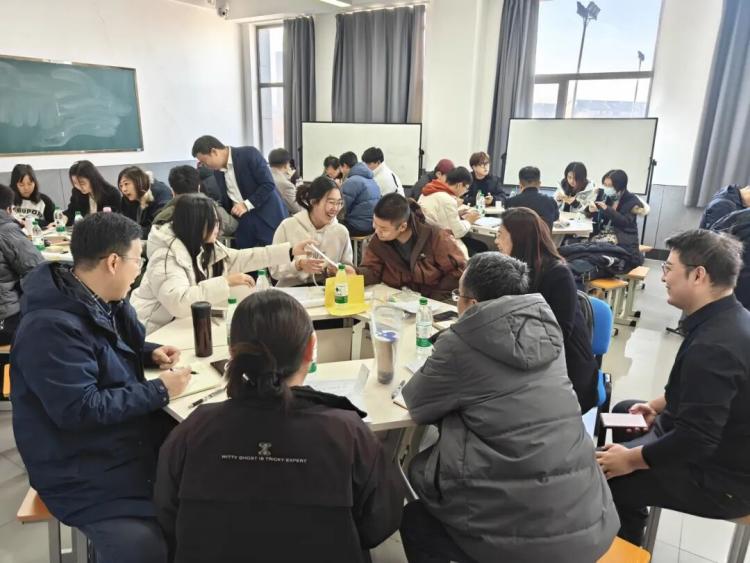
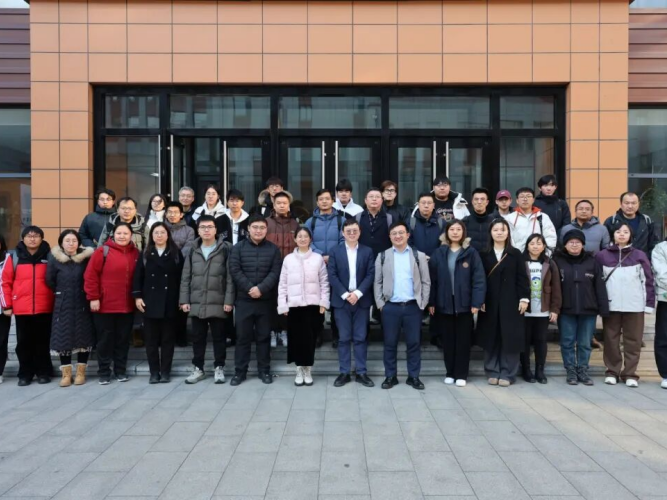
On November 22, 2025, the School of Information and Control of our university, together with Huawei, launched the first “Digital Craftsman” project-based teaching workshop. Focusing on the real engineering project “Intelligent Traffic Intersection Efficiency and Safety Optimization System”, the workshop demonstrated the new concept of talent cultivation — “classrooms connected with projects, teaching serving industries, and learning integrated into practice” through high-intensity, immersive project practice, setting a typical example for the construction of modern industrial colleges and the implementation of the practical education system.
Rooted in Real Industrial Problems, Teaching Content Aligns with Industrial Needs
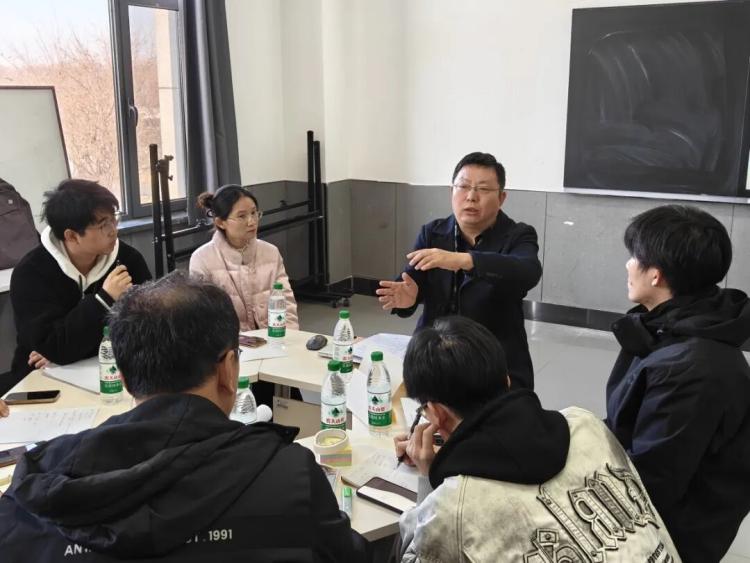
Different from traditional demonstrative and verification-based teaching, this workshop was oriented to real industrial pain points, with enterprise-level project tasks jointly designed by the university and enterprise. The project targeted long-term traffic congestion and potential safety hazards at a core urban intersection, putting forward clear engineering requirements including low latency and high reliability, fully replicating the technical constraints and application scenarios of frontline industrial work. The classroom was directly extended to engineering practice: within a limited time, teams conducted analysis, demonstration and technical selection around complex problems, truly experiencing the reality of multi-objective constraints and uncertainties in engineering practice. This teaching model of “problems coming from industry, solutions returning to industry” thoroughly implements the university’s teaching philosophy of “majors are projects, projects are majors”, helping students develop a pragmatic, rational and responsible professional attitude by solving real-world problems.
Teacher-Student Teams for Work-Integrated Learning, Practicing the Education Concept of “Character First, Talent Second”
The workshop adopted an innovative organization form of “teachers and students working together, work-integrated teaming”, achieving a breakthrough in the education model. Participating teachers were backbones trained systematically by the enterprise, acting as project managers, system architects and other roles to provide full guidance. Students formed cross-major teams and undertook specific tasks including product planning, data analysis, technical design and process recording in accordance with standard enterprise project procedures. During the 6-hour high-intensity collaboration, teams strictly followed the enterprise systems engineering process, completing the whole project cycle from demand analysis, problem decomposition to scheme demonstration and result delivery. Such real role division and time pressure not only strengthened students’ technical skills, but also comprehensively improved their communication, collaboration, responsibility and emotional management. The education requirement of “Character First, Talent Second” was integrated into the whole project, realizing the synchronous advancement of ability cultivation and value guidance.
Building a New “AI + Education” Ecosystem, Closing the Loop of “Learning, Application and Innovation”
Centered on the new infrastructure scenario of intelligent transportation, the workshop deeply integrated Huawei’s full-stack “cloud-edge-device” technology system. Teachers and students systematically applied industrial-level technologies including OpenHarmony, Kunpeng servers, Ascend AI processors, MindSpore framework and ModelArts cloud AI training platform in scheme design. Through repeated demonstration and deduction, teachers were able to apply enterprise-enabled technologies to real project cases and better cultivate students’ comprehensive abilities. For students, the shift from “passively learning technologies” to “actively understanding design logic” was achieved: they learned to balance technical architecture and ensure system stability and scalability based on system objectives. This process not only strengthened students’ overall understanding of AI applications in real engineering scenarios, but also effectively improved their ability to solve complex engineering problems, successfully forming a virtuous cycle of “learning by doing, innovating by applying”, and highlighting the university’s core goal of empowering industrial college construction with AI.
Long-Term Empowerment Driven by Projects, Drawing a New Blueprint for Industry-Education Integration
As an important practice of the university’s multi-collaborative education system of “teaching – research – projects – competitions”, the first “Digital Craftsman” workshop has produced a number of solutions with further development potential, laying a solid foundation for future innovation and entrepreneurship competitions, university-enterprise joint research and student innovation projects. In the future, relying on the modern industrial college platform, the university will summarize the experience of this workshop, continue to deepen cooperation with leading industrial enterprises, and promote the normalization of project-based practical teaching in key fields such as intelligent manufacturing, intelligent energy and digital economy. It will further expand the depth and breadth of students’ participation in real industrial projects and continuously improve the quality of application-oriented talent cultivation. The “Digital Craftsman” project-based teaching workshop is a vivid practice of responding to the era’s question of “how to cultivate application-oriented talents”. The university will continue to take industry-education integration as the starting point, and through down-to-earth exploration and innovation, enable more students to master skills, enhance capabilities, understand responsibilities and dare to take on responsibilities in real project practice. It will ensure that students truly benefit from the construction of modern industrial colleges and cultivate more high-quality application-oriented talents for national industrial development.
Translated by Basic Courses Department