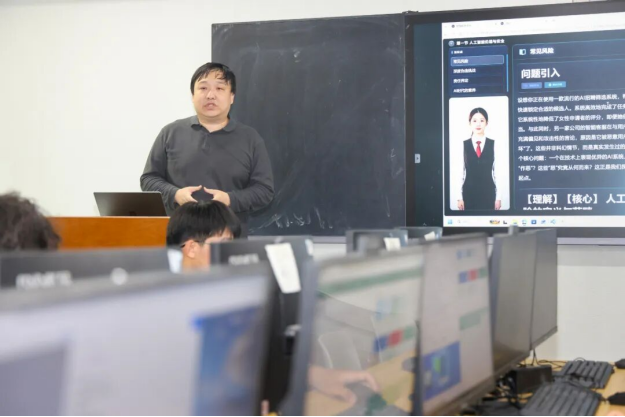
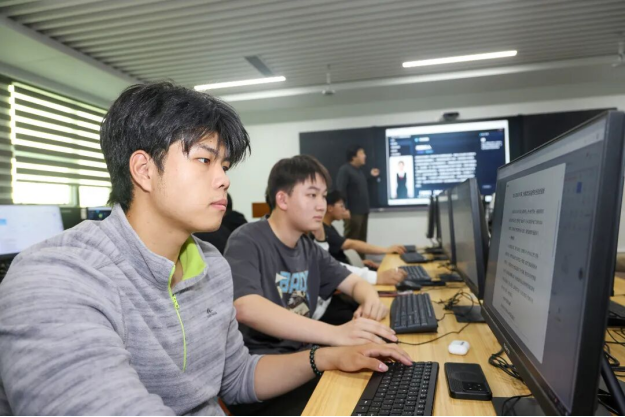
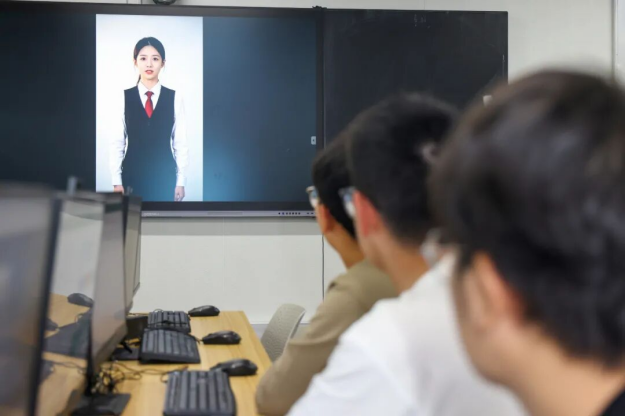
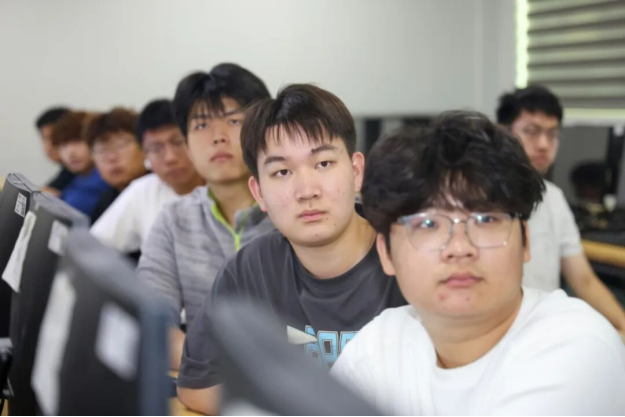
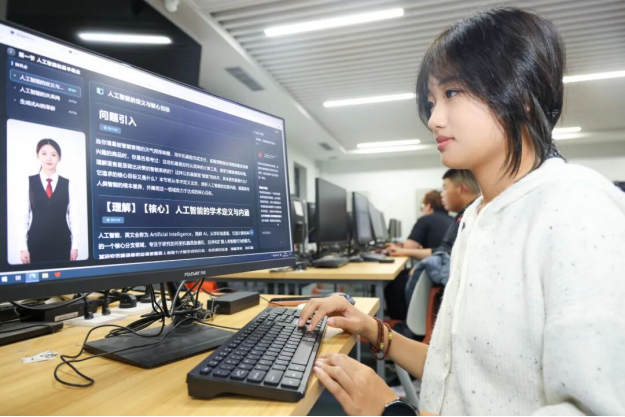
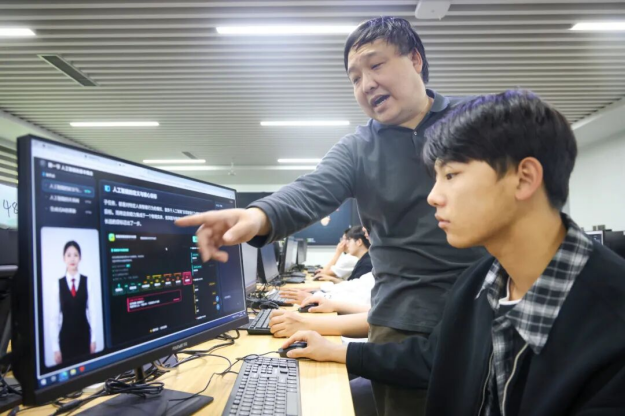
The digital and intelligent transformation of teaching at our university is steadily advancing, alongside the ongoing development of an “AI Agent-Powered University.” Leveraging its self-developed smart teaching platform, the university has launched a program to develop high-quality smart courses. Through the reconstruction of course resources, innovation in teaching models, and the development of intelligent teaching assistants, the university continues to explore new approaches to education through human–AI collaboration.
As this initiative progresses, outstanding faculty members and innovative teaching reform outcomes continue to emerge. The AI agent developed for Data Mining and Data Analysis is a representative achievement of the university’s smart course development initiative. The course is led by Na Chongzheng of the School of Information and Control, who works with Wang Yucai, Guo Mingyu, Li Hao, Zhou Jianzhou, Shi Xiunan, and Cao Jian as part of the Big Data Curriculum Team. Together, they are responsible for developing the course’s AI agent.
The course AI agent is empowering students’ learning experiences in comprehensive and profound ways. It breaks down geographical barriers to access to high-quality educational resources, enabling students at our university to benefit from course materials and instructional support comparable to those available at leading universities in China. As a result, students are less constrained by differences between institutions when beginning their professional studies.
Meanwhile, the AI agent enables students to ask questions and receive assistance independently at any time, without being limited by class schedules or teachers’ availability. It can also help students develop personalized learning pathways based on their learning progress and areas of weakness, providing a clear basis for deciding what to learn next. With intelligent question-answering support available around the clock, learning can transcend the constraints of time and space. Students can progress at their own pace, deepening their understanding through repeated inquiries and immediate feedback.
Data Mining and Data Analysis is a core professional course that combines theoretical depth with practical engineering applications. It involves complex algorithm derivations, data-cleaning procedures, and hands-on programming. In traditional classrooms, limited instructional time makes it difficult to address every student’s individual questions. Students may struggle to fully understand abstract algorithmic principles or encounter repeated errors during computer-based experiments. When these problems arise, timely and detailed feedback is not always available. Such challenges are common in big data-related courses.
To address these practical teaching challenges, the course team initiated the development of an AI agent. Drawing on the subject expertise and teaching experience of frontline faculty members, the team positioned the agent as an in-class, subject-specific teaching assistant aligned with the course syllabus and connected to real-world industrial practice. The development process focused on three core tasks: constructing a specialized professional corpus, designing prompt engineering strategies, and reviewing and correcting generated content. These measures help mitigate the risk of AI hallucinations at the source and ensure that the agent’s responses are rigorous, accurate, and standardized.
A high-quality knowledge base is fundamental to ensuring that an AI agent can function reliably as a professional teaching assistant. To this end, the team systematically selected and organized subject-specific materials from multiple dimensions to build a structured knowledge base. This resource also supports students who wish to explore topics beyond the core curriculum and pursue more advanced learning.
After completing the knowledge base, the team turned its attention to prompt engineering and iterative error correction, refining the prompts and reviewing the agent’s responses through multiple rounds of testing. These efforts enabled more precise control over the large language model’s instructional logic and response behavior.
Following sustained development and refinement, the course AI agent has been officially integrated into regular teaching, covering the entire learning process before, during, and after class.
Before class, students use the agent to preview key and challenging topics and independently build their conceptual frameworks. During hands-on computer lab sessions, the agent quickly addresses basic problems, such as syntax errors and data-dimension inconsistencies. This relieves teachers of repetitive question-answering tasks, allowing them to focus on explaining algorithmic approaches and breaking down difficult concepts. After class, students can initiate multiple rounds of questions and answers at any time, undertake supplementary exercises, and adjust their learning pace independently.
The value of the course AI agent extends beyond student support; it also contributes to the professional development of teachers. Throughout the process of organizing the knowledge base, refining prompts, and repeatedly checking and correcting responses, teachers revisit and restructure the course’s knowledge system. They also learn to examine how concepts are presented and identify learning difficulties from the students’ perspective.
By taking over a substantial amount of basic and repetitive question-answering work, the AI agent effectively frees up teachers’ time and energy. This allows them to devote greater attention to instructional design, helping students overcome challenging concepts, and providing individualized guidance and communication.
Looking ahead, the university will continue to deepen its commitment to smart course development, draw on practical experience gained from building course AI agents, and continuously improve its digital teaching resources. By promoting the deeper integration of artificial intelligence and discipline-specific instruction, the university aims to advance personalized education through digital and intelligent technologies and continuously improve the quality of talent cultivation.
Translated by Basic Courses Department