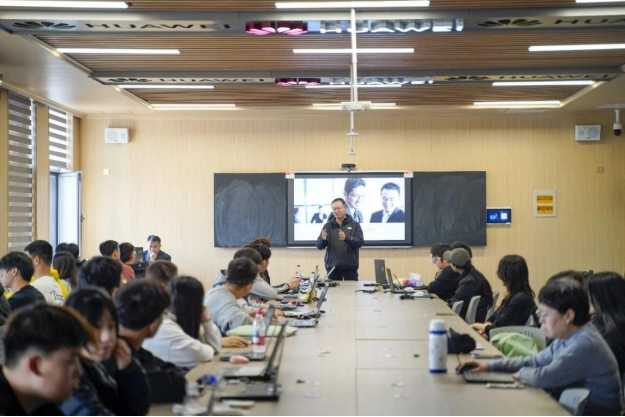
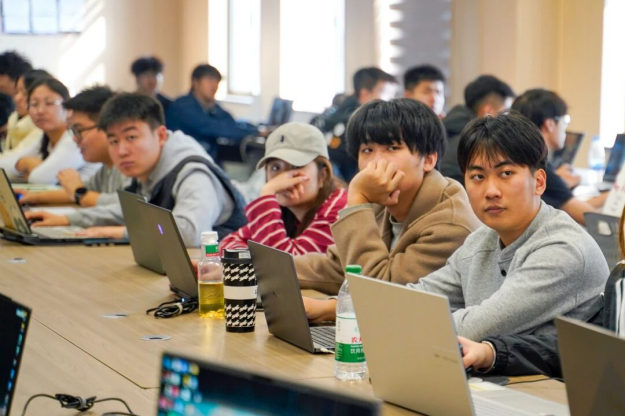
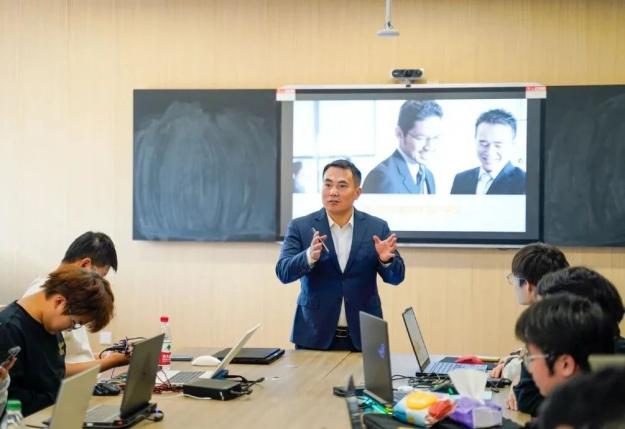
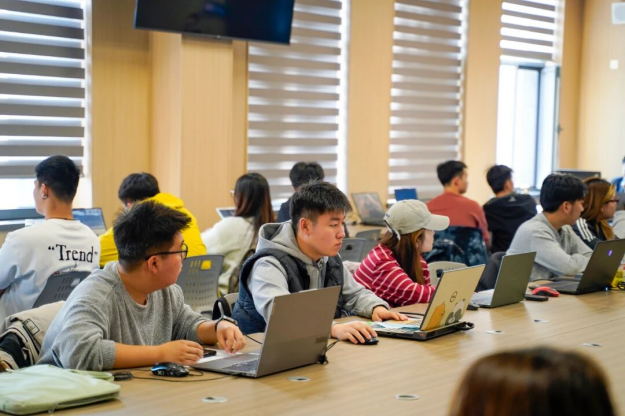
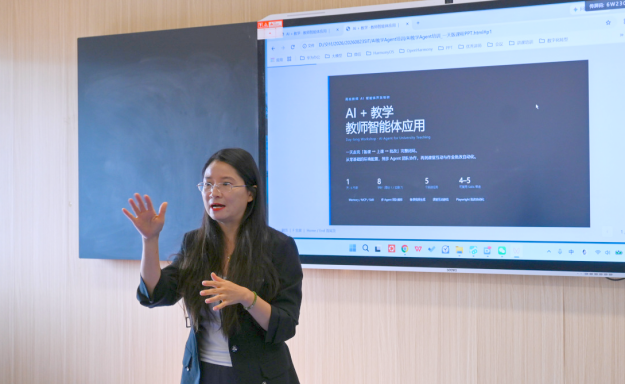
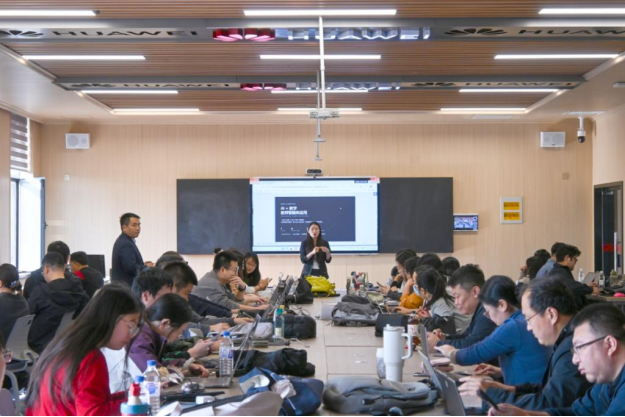
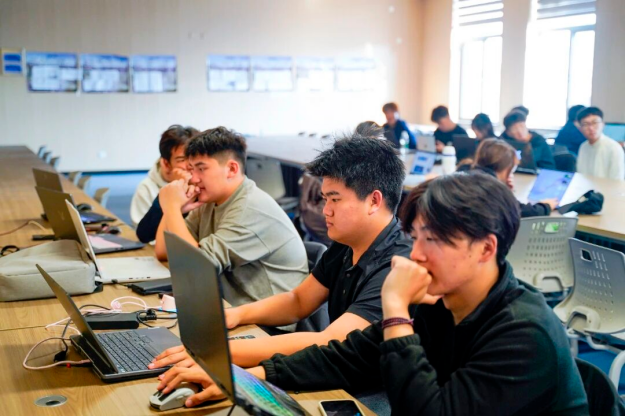
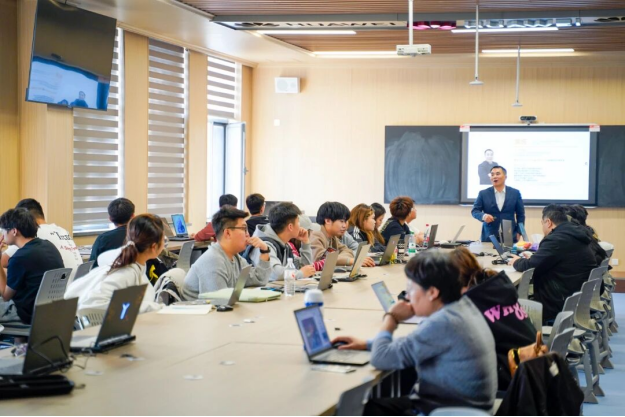
On November 2, the student session of Shenyang Institute of Technology’s AI Agent Practical Training Camp officially opened. The one-week training camp adopts a five-stage progressive training framework: Cognition Building–Hands-on Practice–Knowledge Consolidation–Video-based Innovation–Roadshow & Release. It guides students to move beyond merely using AI tools and take part in the hands-on development of AI agents, facilitating their transformation from "AI users" to "AI creators" and helping them build solid comprehensive capabilities for the digital-intelligent era.
Breaking the barrier of coding proficiency, this student training camp follows the educational philosophy of "Agent Building for All, Empowerment for Every Major", offering practical opportunities to students across diverse disciplines. The curriculum is designed in progressive modules: Camp Opening & AI Agent Fundamentals, Building Your First AI Agent, Scenario Selection and Knowledge Base Construction, Implementation of Video-based Scenarios, and Outcome Roadshow & Graduation. At the opening session, students systematically distinguish generative AI from AI agents and understand their capability boundaries. They learn the underlying technical logic of agents: Perception – Reasoning – Action, breaking the stereotype that AI technology is inaccessible and overly complex.
During the hands-on practice phase, students start with simple requirement descriptions, complete platform configuration, persona setup and prompt engineering. They build their own classroom learning assistants and run through the full workflow of an AI agent. At the knowledge consolidation stage, participants draw on their own major courses to identify workflows of learning tasks that can be automated. They collect, clean and segment corpus data, build discipline-specific knowledge bases and carry out retrieval verification. This enables them to "embed an entire course into an AI agent", turning ideas into functional practical deliverables.
A highlight of this training camp is the innovative practice of video-enabled AI agents. Students break application scenarios into executable task chains, leverage video understanding and generation technologies, and turn creative concepts such as classroom Q&A, experiment troubleshooting and campus scenery narration into video-based AI agent products, followed by joint commissioning and testing. Towards the end of the training, each group delivers a 15-minute roadshow and defense. Outstanding works will be released on new media platforms including WeChat Channels and Bilibili. Students complete the training through presentation, communication and recognition.
Building AI agents is far more than tuning a chatbot. It cultivates modern core competencies: problem comprehension, task decomposition, knowledge integration and output validation. Participants gain not only hands-on technical skills, but also four key improvements in capacity: Develop sound AI literacy, view large language model technology rationally and reduce over-reliance on AI tools; Build interactive knowledge bases combined with disciplinary expertise to support coursework and internships; Cultivate engineering thinking and accumulate real project experience through requirement analysis, workflow design and iterative debugging; Master the development of small industry-specific AI agents and boost competitiveness for digital jobs.
The smooth rollout of the student session is built on the prior training for faculty members. Our institute has pioneered practical AI agent training for teachers, targeting teachable and deployable solutions to form a closed-loop of AI-enabled teaching covering pre-class, in-class and post-class links. Before class, lesson-prep agents unpack knowledge points and generate learning materials. During class, interactive teaching aids and instant assessments can be generated rapidly. After class, intelligent grading tools identify students’ knowledge gaps and provide personalized learning suggestions, exploring feasible pathways for deep integration of artificial intelligence into classroom instruction. The faculty’s pilot practice has accumulated teaching samples and practical experience for the student training camp.
Supported by its self-developed smart teaching platform and university-level AI computing center, our institute keeps advancing digital transformation in education. Multiple smart courses have been launched, with mature practical cases in course tutoring, experiment guidance and learning analytics. Adhering to the principle of "Faculty Mastery First, Hands-on Practice for Students, Authentic Application in Majors", the AI Agent Practical Training Camp follows the talent cultivation path of "Platform + AI Agent + Practical Project".
For participating students, the greatest takeaway is not merely mastering a set of agent-building skills, but a fundamental shift in mindset. They discard the stereotype that AI technology is remote and esoteric, and transition from passively absorbing knowledge and simply using AI tools to proactively applying expertise to solve real-world problems. Instead of only seeking answers from AI, students learn to define problems independently, design solutions and produce original AI works, fostering innovative thinking for the digital-intelligent future. Taking this training camp as a starting point, our institute will nurture more application-oriented innovative talents in the AI era who are capable of creative thinking, agent development and practical delivery.
Translated by Basic Courses Department